Wednesday, August 7, 2013

Getting Paid To Do What You Love


Dan Bondgren

What looked like a normal fan wearing a Montreal Expos hat and a blue and white polo shirt, turned out to be a Minor League statistician.

The man looked very relaxed with his feet upright on top of the seat in front of him, his food laid out on the floor, and his large Diet Coke resting in his cup holder.

Dan Bondgren, a fan of baseball and an employee of Baseball Info Solutions, had one of the best seats in NBT Bank stadium right behind home club. 

His company assigns a group of employees to cover each team.

He is assigned to attend each Syracuse Chiefs game.

“There are a group of us that work for each team,” Bondgren said. “There are nine of us that work for Chiefs games. Two everyday.”

They cover mostly Double-A and Triple-A teams, Bondgren said.

Every employee is required to take down every single thing that happens within the game, Bondgren said. 

During Chiefs games he rarely has time to put his clipboard down.

"We keep stats for minor league games that get uploaded into a computer so that if scouts or major league teams want to know the ins and outs of a player, and what they can do in certain situations they pretty much have it at their disposal," Bondgren said.

After each game, he goes home and enters the information into a computer program that the company sets up.

Bondgren says, after he puts the information in, he is still amazed with how it is compiled.

The information they gather is not open to the public, Bondgren said.

"This stuff is bought by Major League teams,” Bondgren said. “Whether they take a pitch on the first pitch, or they swing at it. What kind of opposite field power they have. That stuff is up for sale to the highest bidder from this company."

Craiglist Saves The Day

 
Chiefs game August 6th, 2013

Three years ago this job was listed online, Bondgren said. 

“Actually I answered an AD on Craigslist,” Bondgren said.

Getting paid to watch baseball games as a part-time job is pretty nice, Bondgren said.

"You get a free ticket, they pay for the parking, and you make a couple bucks a game," Bondgren said. "There are a lot of worse things that I could be doing."

While he gets paid to attend almost every single game, he also knows a lot about the Chiefs as well, Bondgren said. 

"Well I said it for the last three years, the team has a lot of great assets,” Bondgren said. “they have no middle relievers. Their starting pitching is good. They have some decent fielders. Some good bats. But they cannot find ways to finish games.”

Throughout the game Bondgren did manage to cheer for his team whenever he had the chance.

Even though the team is in last place, Bondgren is grateful for the job and will continue to work for Baseball Info Solutions as long as he can.

To view his companies website click here: http://www2.baseballinfosolutions.com/about-us/


Adults: Ruining Baseball for Kids One Step at a Time

by Matt Dowell

On a Tuesday night at NBT Bank Stadium before the second of two games between the Syracuse Chiefs and the Scranton/Wilkes-Barre RailRiders was set to begin, Ed Young, a Syracuse native, looked out a group of kids sitting above the Chiefs' dugout.

"When you get a baseball, give it to a little kid," he said. "What do you need it for? You old man."

The "old man" he's referring to is a general shout out to all adult fans he says have taken away joy from little kids at baseball games.

From being a die-hard Syracuse Chiefs fan as a kid to an usher for the Chiefs for the past 25 years, Ed Young has seen a lot of crazy things from fans.

"Have you ever seen an umpire throw a fan out?" he said, smiling. "We had an umpire throw a fan out...There was nothing I could do."

He recalled this moment of a fan he says 5-10 years ago was out of control during a playoff game and had to be escorted out by a few of his fellow ushers.

Looking out at NBT Bank Stadium, however, there was one topic that he seemed to be more passionate about than any other. The idea that baseball is for kids and that adults at baseball games should do as much as they can to make the experience as fun as possible for children.

"To me that's the best thing," he said. "...like when you get a baseball and you can hand it to a little kid, you know what I mean? That's nice."

Young says he sees way too many selfish adults at games who are only looking out for themselves.

"You get too many adults taking that away from the kids," he said. "Ya know like autograph-seeking. They've ruined it for the kids."

He also says all the work that is put into the games is first and foremost for children. Young says special things that come with the games such as catching foul balls and getting merchandise is something the ballpark markets for kids, Young said. He says adults need to take a step back and let the kids have their turn at finding that magic at a baseball park.

"Baseball, it's for kids," he said. "As far as the paraphernalia and all that stuff. I don't need a baseball. I got tons of 'em."

Young also says alcohol can be a contributor to adult's craziness at games.

"I get loud fans all the time!" he said. "You know how it is with beer. With every beer they get louder... They won't listen. I usually don't kick 'em out. I just send 'em up there," he said as he pointed to a higher section of the stadium.

Throughout a reporter's conversation with him, Young had a cool, calm, and collected attitude about him. He wasn't, however, afraid to be blunt and brash.

He wasn't fazed by the fact that there were many adults sitting by themselves near him, the exact fans he was talking about.  Ed Young is also not a quiet person. It's obvious that he's seen and heard many things from fans and he says his filter is pretty much gone at this point.

With that being said, however, he says there's nothing he loves more than his job. Young says he loves seeing and making fans, especially the kids, happy and he gets a thrill out of working every single game.

As the interview wrapped up, he gazed back at all of the children sitting by the dugout, energetically waiting to get a ball from one of the players. As the players finished their warm ups and prepared for the second game of the night between the Chiefs and RailRiders, Young uttered under his breath, "Man, that's what it's all about."


Tuesday, August 6, 2013

Syracuse Chiefs Split Two Games with Railriders

By: David Britt – Syracuse, New York – It was a back and forth affair at NBT Bank Stadium tonight. The players stepped on the field at 6:00 PM Eastern Time to continue a game that started on July 12rh in Moosic, Pennsylvania. The first game was being finished in Syracuse yet the Chiefs were the visiting team for the first game. Though the teams played two games, it was not a traditional doubleheader.

The game went two innings before RailRiders second basemen Alberto Gonzalez drove in the winning run.

Mark Montgomery (2-1) picked up his second win of the season while Michael Crotta (4-7) took the loss in the 7-6 game.

Once that game concluded, both teams were given a half hour intermission before the second game began.

RailRiders SP David Huff
The second game was just as close as the first. The Chiefs and the RailRiders combined to put five runs on the board through the first four innings. That is where the scoring stopped.

Tyler Moore put the Chiefs up early with a sacrifice fly in the 1st. Two innings later, Melky Mesa hit a two run home run which temporarily put the RailRiders up 2-1.

That did not last long. In the bottom of the fourth, the Chiefs got three straight singles from Corey Brown, Zach Walters and Jhonatan Solano before Josh Johnson hit the go ahead RBI double. The inning ended when Solano was thrown out at the plate on Johnson’s double.

Yunesky Maya was dominant, pitching eight innings of two run ball, allowing only five hits including the two run home run. The home run was his only mistake of the night. Maya improved to 7-7 on the year.

His counterpart for the RailRiders, David Huff, was not as lucky. Huff allowed numerous hard hit balls throughout the game, but it was the fourth inning that was his undoing.

After five, Huff, who fell to 4-6 on the season, was replaced by Yoshinori Tateyama. Tateyama threw two innings of relief allowing only two base runners while striking out another two.

It has been a tough year for the Chiefs, who moved to 53-63 with the win tonight. Chiefs’ second basemen, Josh Johnson, says this could be exactly what they needed.

“A game like this can really get the ball moving,” Johnson said.

Johnson was one for three with an RBI double. Johnson also singled and stole two bases in the continuation game, making him two for five on the night.

The game had a little of everything, from a pitcher’s duel early on to timely hits.

“We did everything we needed to do [to win],” Johnson said.

While most of the hitters for the RailRiders were struggling, designated hitter Randy Ruiz had a good game. Ruiz went three for four, raising his average to .304 through 48 games with Scranton/Wilkes-Barre.

On the other end, the Chiefs’ Danny Espinosa’s tough season continued. Espinosa went 0-4 in the second game and 0-5 on the day, including the continuation game. Espinosa’s average fell to .202 on the season. Espinosa and DH Chris Marrero were the only two Chiefs not to record a hit during the game.

Erik Davis came in to close the game for the Chiefs. It was shut down 1-2-3 inning for Davis as he recorded his 12th save of the season.


The Chiefs finish off their series with Scranton/Wilkes-Barre tomorrow before starting a four day, five game home series with the Pawtucket Red Sox.


David Nuno's Take on the Industry

Courtesy of KTRK-ABC 13
David Nuno is a sports reporter at KTRK - ABC Channel 13 in Houston, Texas. He's the recent addition to the sports team joining just last year in 2012. Yet, he's been in this business for nine years starting back in 2004 at the ABC affiliate KXXV in Waco.  

Nuno's career isn't limited to just sports broadcasting. He worked as the marketing and communications manager for the Harris County Houston Sports Authority. He even dabbled in sports radio as a host for Yahoo Sports Radio and 1560 The Game. 

Yet, Nuno said his most exciting job before television was working for the Dallas Mavericks for two years as the corporate and Hispanic marketing manager.

"While I was with the Mavericks I got to do some broadcasting stuff and I got to do some marketing at the corporate level. So I got to experience a little bit of everything from the business side of sport," Nuno said. 

Even as a sports journalist, Nuno believes sports business can still impact the job of a journalist. The trend of teams and leagues owning their own networks, like NBA-TV, could question the objectivity of journalists working at these media outlets.

"Yes, you are a legitimate media outlet. They hire real journalists to cover the teams but even if you are a journalist you can be a bit I believe swayed because of your allegiance of who your employer is," said Nuno.

Yet, Nuno believes the most challenging aspect for sports journalists is adapting to the ever changing field of journalism.

"This business today is going to be different in three years. You're going to have to be able to give people the information they want, when they want it. So the industry itself ought to be ahead of the curve in the video perspective and from the story telling perspective." 


Listen to the interview here: 


How long in sports broadcasting. Since you started the broadcasting side.

I started in 2004

You worked a little bit for the Dallas Mavericks. How did this open your eyes to the business side of sport?

It’s funny. That’s probably one of the most fruitful and best jobs I could have had. While I was with the Mavericks I got to do some broadcasting stuff and I got to do some marketing at the corporate level. So I got to experience a little bit of everything from the business side of sport. At that time it was regarded as one of the best organization. They were just an amazing experience to see how that organization was put together. It was kind of an expansion team. When I started mark Cuban had just bought the team. And they were one of the worst teams in all of sports. To see how they’ve built a championship team I was kind of behind the scenes on that. Taught me a lot about how to put a team together from now a business standpoint and operations standpoint.

NBA first to create own TV channel. How does NBA TV control their contact and media relations of the mavericks?
I didn’t really see it that way. I do know where you’re going. It’s no difference
You want to kind of control the information because this is your brand. Yes you are a legitimate media outlet. They hire real journalists to cover the team. And place them in cities. You’re seeing more of that putting real journalist on the beat. But even if you are a journalist you can be a bit I believe swayed because of your allegiance of who your employer is.

How do regional networks impact journalists doing their job?
I think it has to play a little part. I don’t know how big of a part it plays in the content model. Yea they are owned by the rockets and the Astros but they are also owned by NBC and NBC has a strong mark of journalism behind their name. When you work closely to anybody you’re going to see things differently. When you work directly Yes, it affects it a little bit. Information is because of their exclusivity they are able to get more access. Like when Dwight Howard signed with the rockets. Darryl morrow got off the phone with Dwight and walked over to Comcast and did a quick interview where we had to wait a little bit. So there are advantages and disadvantages to being so close.

The challenges of covering Dwight Howard
ABC we have a relationship with the Texans. We get to broadcast the games. During the preseason we have affiliation with the team through the year.do we get Access is a little different. At the end of the day it’s the same. To me a strong reporter doesn’t matter who you work for. Like Dwight Howard story. I don’t know if Comcast had anything more than an interview quickly afterwards. But breaking that story, USA today broke the story. If you’re a good journalist, then you’re a good journalist.

How those in power can control media access?
It’s kind of hard to say, because we can’t show a highlight during the event per say or maybe an hour until it’s ended. Yea it can bother us. If you care about the NCAA you’re probably watching it takes place. Yea it kind of bothers me a little bit. Just like the Olympics, if you really care you’re probably watching it. And you almost you don’t want to give your viewer a reason to go watch someone else. This game isn’t over yet but go watch it, go watch folks. That’s basically what you’re doing so. So it does affect us but at the same time it can save us at some points.

Developing bad relations impacting media access cut off:
I have heard stories like that. At the end of the day it’s the journalist responsibility to develop relationships. It goes back to the actual reporter. If you don’t do a good job developing a relationship and you do talk smack about somebody. Of course they are not going to go out of their way to help you. But if you are doing your job the right way, I think you people respect it.

How do you feel money impacts NCAA and conference realignments?
From my perspective, it doesn’t matter. What matters to me is the intriguing story lines for what people care about what they are going to talk about at the water cooler. I was able to do a lot of coverage of Texas A&M because of the conference realignment. The University of Texas is always covered because it’s a major university. Other schools that aren’t as important don’t get covered or will receive less amount of coverage. With A&M moving to the SEC it made the SEC relevant to our market. So the big 12 is relevant as well. So from that respect it doesn’t matter. And do think that we’ve spent a lot of money. By we I mean ABC spent a lot of money in getting Big 12 rights. CBS spent a lot of money on SEC rights so you more than likely focus on that a little bit more because it is on your air.

Other thoughts on the industry:

It’s changing. This business today is going to be different in three years. We live in a world where people are tracking their news instantly. The days were 5, 6, 7 o’clock news…I don’t want to call them dinosaurs but they are going to be different. You’re going to have to be able to give people the information they want and when they want it. The new generation of viewers out there is being trained to get news instantly. So the industry itself ought to be ahead of the curve in doing that from the video perspective, from the story telling perspective.   

Monday, August 5, 2013

DJ Summers: Aspiring Literary Giant


It was not until much later in his life where sports began to truly influence and impact Daniel Joseph "DJ" Summers.  
"I didn't really get into sports until I was maybe about 20 years old, I went through a kind of rebellious phase between the ages of 16 and 20, 21 somewhere around there and didn't really get into sports all too much."
Born in Texas, but growing up in several states mainly Utah, DJ currently finds himself at Newhouse School of Communications pursuing a Masters in Magazine, Newspaper, and Online Journalism with a Sports Communications emphasis.

DJ never thought of pursuing a career in sports let alone his masters.  
"Up until 9 months ago I never considered having a career in sports communications.  Up until then, I always considered having a corespondent position doing business reporting."
He aspired to work for companies like the Wall Street Journal and New York Times.  He now hopes to become a boxing reporter for the Las Vegas Review Journal or LA Times, and impact his readers with the numerous ideas and thoughts that he possess.

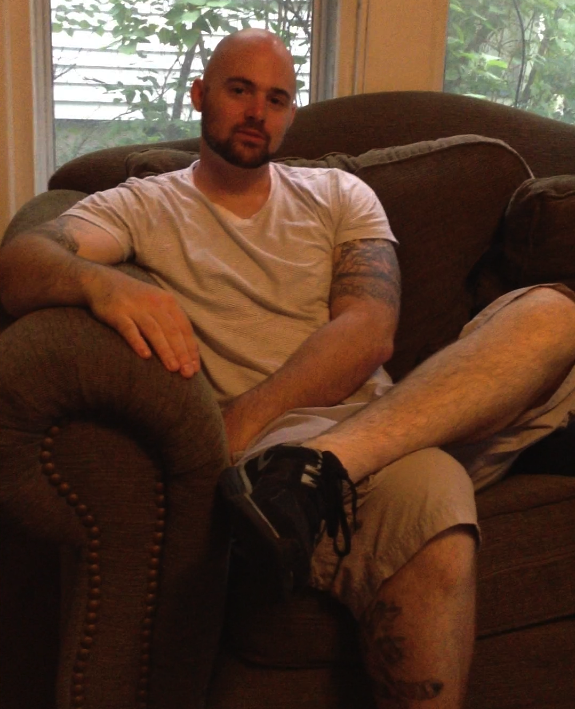
Though sports were not a huge aspect of his life, DJ does enjoy boxing and mixed martial arts.  As DJ sat comfortably in the couch with his leg folded over the other, he spoke with great fascination about the art of the two sports.  Not only does he find passion in the sport itself, but also in the literary giants and history associated with them.  
"On a deeper and resonate level, boxing is connected on so many different layers with culture itself.  It's just been saturated in our culture in absolutely every regard in communications, in history, in concepts of evolving identity in the United States from the industrial revolution onward.  All these different little pieces of American culture all have been tied directly to boxing somehow.  t has such a cultural draw to it where so many piece are attached.  I would like to be a part of that tradition."
He enjoys the evolution and connection boxing and MMA have to the American culture.  Through his writing he hopes to be a part of the cultural draw and influence boxing and MMA has.  He wants his readers to look at the sport in a more cultural aspect.


BJ - I want to first start off by asking where did you grow up at? 

DS - I born in Texas, then when i was a little younger we moved to New Mexico, then I moved to Salt Lake City. i spent the most time there but I also spent some time in Minneapolis, Denver, Boston, and now I'm here… But mostly Salt Lake City.

BJ - What were some of the sports you grew up watching or liking? 

DS - I really like baseball when i was younger. i like the history of baseball.  I like how embedded it was into this rich tapestry of American culture. My dad was a big baseball fan, I played little league.  I wasn't great.. i wasn't terrible but I wasn't great.  We watched that.  I didn't really get into sports until I was maybe about 20 years old, I went through a kind of rebellious phase between the ages of 16 and 20, 21 somewhere around there and didn't really get into sports all too much.

BJ - Later on in your life you would say you started to enjoy sports, but you decided to pursue the sports communications emphasis.  Why did you pursue that as a Master's degree? 

DS - That's a good question, I actually hadn't plan on doing the SCE until on the application for SU for Newhouse, they asked if you would like to be considered for the sports communication emphasis and tell us why we might be able to let you in.  I thought I have a lot to say about boxing and mixed martial arts, those are the two sports I'm really into the most.  So I wrote some stuff about some thoughts i was having, some kind of direction I'd like to take in reportage where that is concerned and they let me in.  So up until 9 months ago I never considered having a career in sports communications.  Up until then, I always considered having a corespondent position doing business reporting… Wall Street Journal, New York Times, The Washington Post, that kind of thing.  But now I'm actually starting to consider the possibility of being a boxing writer for the Las Vegas Review Journal, LA Times, somewhere out west where all the really exciting fight stuff is happening now.

BJ - You say you want to be a writer for boxing or MMA, why do find such a passion in those two sports? 

DS - Boxing is a fascinating subject on so many levels itself.  For one I love the sport itself.  I love the physicality of it, i love the action and everything about boxing.  But on a deeper and resonate level, boxing is connected on so many different layers with culture itself.  It's one of the oldest sports that we do, that we still do.  It transcends sports in some other ways.  A lot of philosophers and sociologist talk about the concept of deep play which is what boxing really illustrates.  Where it resonates with us on a primal level.  It's just been saturated in our culture in absolutely every regard in communications, in history, in concepts of evolving identity in the United States from the industrial revolution onward.  All these different little pieces of American culture all have been tied directly to boxing somehow.  And it has a rich literary history, so many literary giants have loved boxing.  Hemingway loved boxing, James Joyce loved boxing, Joyce Carol Oates loved boxing.  Jack London was a boxing reporter, Lord Byron was a boxing reporter, everyone loved boxing.  It has such a cultural draw to it where so many piece are attached.  I would like to be a part of that tradition.  Mixed Martial Arts is very exciting and I actually find it as a boxing historian, it is repeating the same course that boxing took in the early 1900s, in the early 20th century.  A part from the sheer enjoyment i get from watching it, and the sheer enjoyment of the athletic involvement.  I love having the comparison of the evolution of mixed martial arts and the evolution of boxing in the early 20th century.

BJ - It looks like you want to do as a career, is basically let your viewers know the culture aspect and relationship with wrestling to the community.  Anyone you look up to in that career field you wish to pursue? 

DS - Yes, there is a lot of writers who have done a really good job in trying to tie all that stuff in.  Joyce Carol Oats that are really good, wrote a little book in boxing.  I really like Dan Raphael's coverage, he is ESPN's boxing blogger.  On the MMA angle, there's Ariel Helwani who has done a podcast from day 1 from 2006 when MMA really started hitting the mainstream.  And those are some names, there are some others but those names really pop out.

BJ - Okay great, well thank you for this interview.  Have a wonderful day! 

DS - You do the same.


Mike McCann: Every Season Is Baseball Season


Born With a Bat


Roger Hornsby could have summed up my interviewee’s life with one quote: “People ask me what I do in winter when there's no baseball.  I'll tell you what I do.  I stare out the window and wait for spring.” 

Mike McCann was wearing a bright orange polo shirt representing his new (Syracuse University) school's colors. 

He is a 22-year old Broadcast Digital Journalism graduate student from a small town outside of Detroit called Northville. 

He is an avid sports fan, and loves anything that involves baseball, McCann said. 

"The first sport I ever played was baseball and then I played soccer as well," McCann said. "Baseball since I was four or five with T-ball. Played till last year, my Senior year of college."

He played for a Division III school called Kalamazoo, McCann said. 

He was a very resilient player and played every game as if it were his last, McCann said.

His coach made him bunt in the last inning of a game, and he was three for four before the at bat, McCann said.

"I did not want to bunt I wanted to hit," McCann said. "I think I took that with me and I bunted into a double play and we lost the game."

The next game he did not give up, and went a perfect four for four and won the game, McCann said.

Die Hard Detroit Tigers Fan


Mike McCann has always been a Tigers fan.

The Tigers were a mediocre team for many years, and he still loved his team, McCann said. 

"I was young so it was different in a sense that it was important for me that they would win when I was there," McCann said. 

His favorite moment was when Magglio Ordonez, a former Detroit Tiger outfielder, ended up hitting a homerun that sent the 2006 team to the World Series. 

"I remember watching it in my living room with my whole family," McCann said. "It was a surreal moment when your team is going to this pinnacle, the World Series."

Mike also strives to be a MLB play-by-play announcer someday, McCann said. 

Ernie Harwell, the famous voice of the Detroit tigers, is his idol as well, and he wants to resemble his craft when he calls games.

"The way he was revered by sports fans and the community," McCann said. "The way he carried himself made a tremendous impact on me. 

Mike hopes his Broadcast Digital Journalism degree will help provide the foundation and tools to succeed in his prospective field, McCann said. 


Watch Video Here


The Interview

Max: Where are you from Mike?

Mike: From just outside Detroit Michigan. It is called Northville, about twenty miles West.

Max: Have you always lived there?

Mike: I have never moved. I have always lived there since I was born, until now.

Max: Do you miss it?

Mike: Yes and no. I miss the people. As far as the city goes it is a pretty average town. But, I do miss the area at times.

Max: What was the first sport you played?

Mike: The first sport I ever played was baseball and then I played soccer as well. But, I didn’t like oranges. So, keeping up with soccer was tough when you couldn’t eat the food the parents brought to the game. Baseball since I was four or five with T-ball. Played till last year, my Senior year of college.
Max: Isn’t that weird that you are going to Syracuse, where it is the Orangemen?

Mike: I found it a little ironic, yeah.  I sense now. I eat them now. I was a picky little eater when I was young. I wanted grapes, and I didn’t get grapes.

Max: I am guessing you favorite team is the Detroit Tigers?

Mike: The Detroit Tigers is correct. From the time I could walk I had Tigers gear on. It has been a love affair ever since.

Max: It probably was tough for your first fourteen years being a Detroit Tigers fan, and now they are great again.

Mike: I was young so it was different in a sense that it was important for me that they would win when I was there. I don’t think watching them on TV it was as much as a priority. You have other priorities. When you are young you want to be outside with your friends. As you get older you pay more attention. It has been good that they have been competitive for the last 7 or 8 years they have been competitive. It has been a joy to watch.

Max: What was your favorite memory?

Mike: The 2006 American League Championship series. Magglio Ordonez hit a homerun that sent them to the World Series. I remember being grounded for reasons unspecified. I remember watching it in my living with my whole family. It was a surreal moment when your team is going to this pinnacle, the World Series.

Max: Was your dad a baseball player?

Mike: He wasn’t. He played a little bit when he was younger. He was a big hockey player. He played in college. I think it was easier for me to fall in love with baseball, because he didn’t put any pressure on me to play anything. I played hockey growing up and I remember having to tell him that I  wanted to stop and play basketball. He said it was fine. From then on it in, it sort of became whatever I wanted to do was good. I wanted to play baseball. I have had the same group of friends because of baseball. Everything that baseball has done for me, it is the reason I have gotten into college and the reason that I am here.

Max: What was your worst memory playing in college?

Mike: My worst memory was a very vivid game playing against Alvet College, and we were down a run in the seventh inning. We play seven innings in college. Not nine like the pros. There was a runner on first base and I was up, and I was three for four and I had the bunt sign. I was not happy about it. I did not want to bunt I wanted to hit. I think I took that with me and I bunted into a double play and we lost the game. It was tough. But, I turned it around and went four for four the next game.  So, we won that won. And we won the last two. It was one of those things that stick with you. You want to be the teammate that gets the job done. And I didn’t get the job done that time.

Max: Would you ever one want to be a coach?

Mike: I don’t think I have the patients for it. It is an honorable profession and there is a lot to do within it. But, for me I am too inpatient. I don’t think I could do it.

Max: Lastly, because you came to Syracuse you want to be in sports. Who is your favorite sports announcer?

Mike: I grew up listening to Ernie Hardwell. He was the voice of the Tigers from the time that I was born till I was twelve or thirteen. Another thing that I think stemmed from my dad and his love of Ernie Hardwell. I just picked it right up. The way he was revered by sports fans and the community. The way he carried himself made a tremendous impact on me.

Max: Where do you see yourself in ten years?

Mike: I see myself calling baseball games somewhere. I am not sure where. I say for a Major League team. That is ambitious. But, you got to be ambitious. 


Wednesday, July 31, 2013

Football Season Is Almost Here

Commentary by Alicia Nieves about the approaching NFL season.


Watch the Commentary here: